The Challenge

The Brick Kiln Problem

Across South Asia, traditional brick kilns are a major source of black carbon, fine particulate pollution, and major health damage. Upgrading how these kilns operate is one of the fastest, lowest-cost ways to reduce emissions and deliver measurable climate and public-health benefits.

Why brick kilns matter

A major black carbon and public-health opportunity hiding in plain sight.

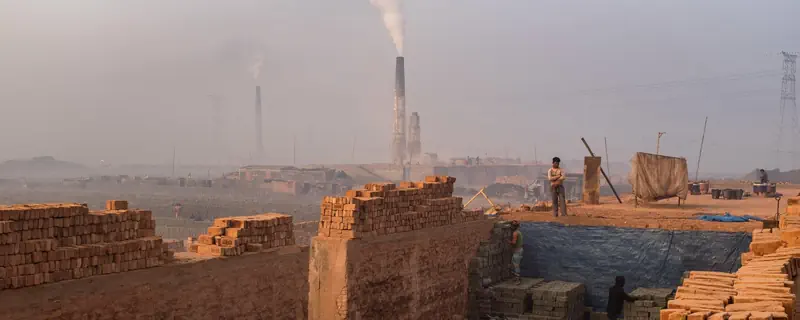
Across South Asia, brick kilns remain one of the most concentrated and under-addressed sources of harmful air pollution. In many kiln belts, legacy production systems combine high fuel demand, incomplete combustion, and dense nearby populations. The result is a sector with outsized relevance for black carbon, particulate pollution, and near-term climate impact.

What makes the sector strategically important is not only the scale of the problem, but the practical possibility of intervention. Brick kiln transition starts by identifying where kilns are concentrated, where health impacts are likely to be highest, and where upgrades appear more feasible than average. That is the purpose of this platform.

Brick kiln landscape with visible industrial smoke and stacked bricks

Climate relevance

Black carbon and inefficient combustion make kiln upgrades highly relevant for climate.

Brick kilns are a major short-lived climate pollutant opportunity, especially where black carbon and inefficient combustion remain concentrated.
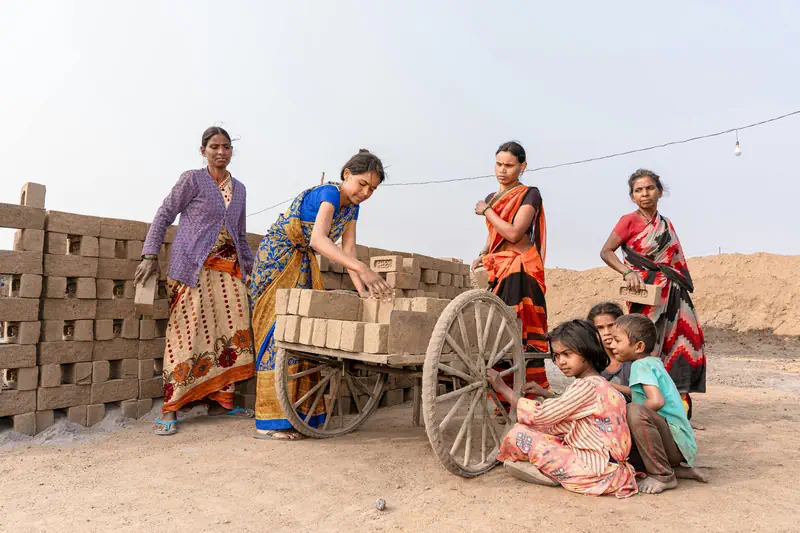
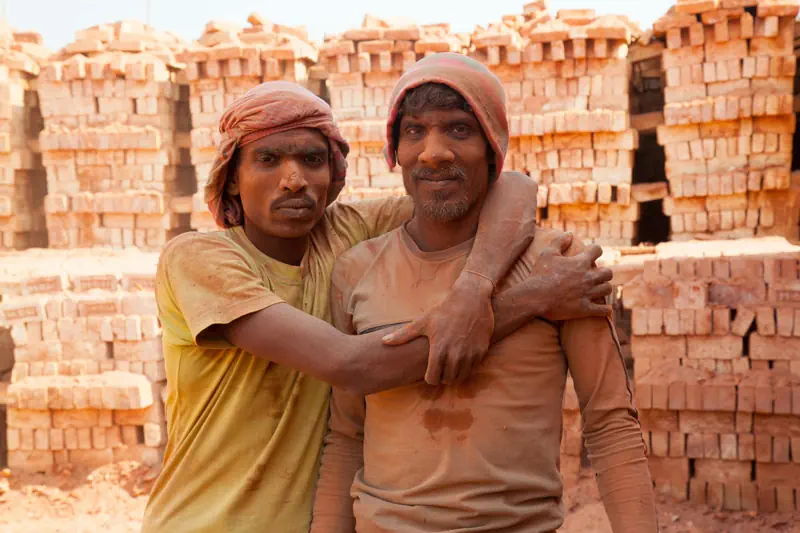
Workers and children near brick production activity

Human exposure

The public-health burden rises where industrial emissions overlap with daily life.

Kiln impacts matter most where industrial emissions overlap with dense nearby populations and already polluted airsheds.

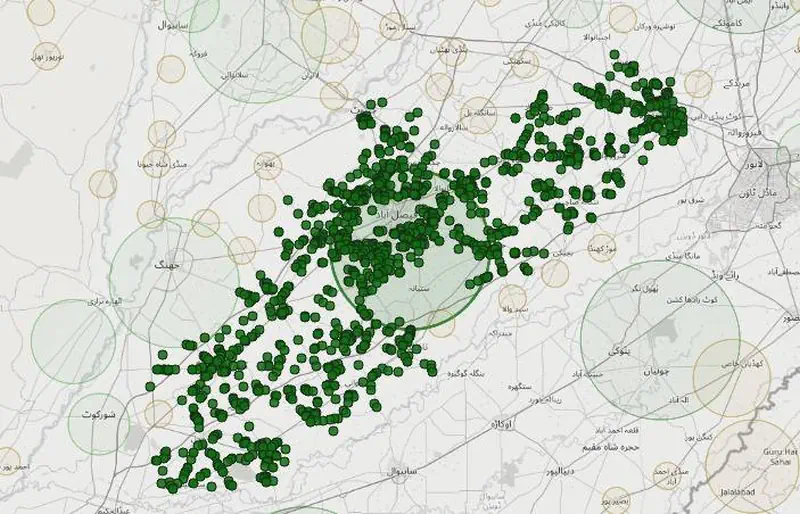
Map view showing clustered kiln corridors

Transition potential

Public evidence now supports more disciplined targeting.

The sector is difficult, but not opaque. Public data can now support more disciplined targeting than was possible even a few years ago.

Evidence-driven origination

A corridor-first platform for targeting, prioritization, and project development.

Brick Kiln Analytics is not a live emissions monitoring system and not a kiln-by-kiln certification tool. It is a platform for identifying where intervention development should start first. The platform works at corridor scale because that is where public evidence is strongest and where field validation, stakeholder engagement, and implementation planning are most likely to happen in practice.

The workflow is straightforward. Public kiln detections are cleaned, grouped into corridors, and enriched with population, vulnerability, feasibility, and air-burden context. Those layers are then translated into transparent scores for harm, readiness, confidence, and priority. The result is a ranked regional screening layer built to support validation and engagement, not to suggest that public data alone can settle every investment decision.

1

Identify kiln corridors

Deduplicated kiln detections are grouped into corridor units rather than treated as isolated dots.

2

Attach public context

Each corridor is enriched with exposure, vulnerability, transition, and air-burden layers.

3

Score transparently

Priority is built from harm and transition readiness, with confidence preserved as a separate evidence signal and used as a gating rule.

4

Support project development

The output is a defensible shortlist for field validation, owner engagement, and eventual intervention design.

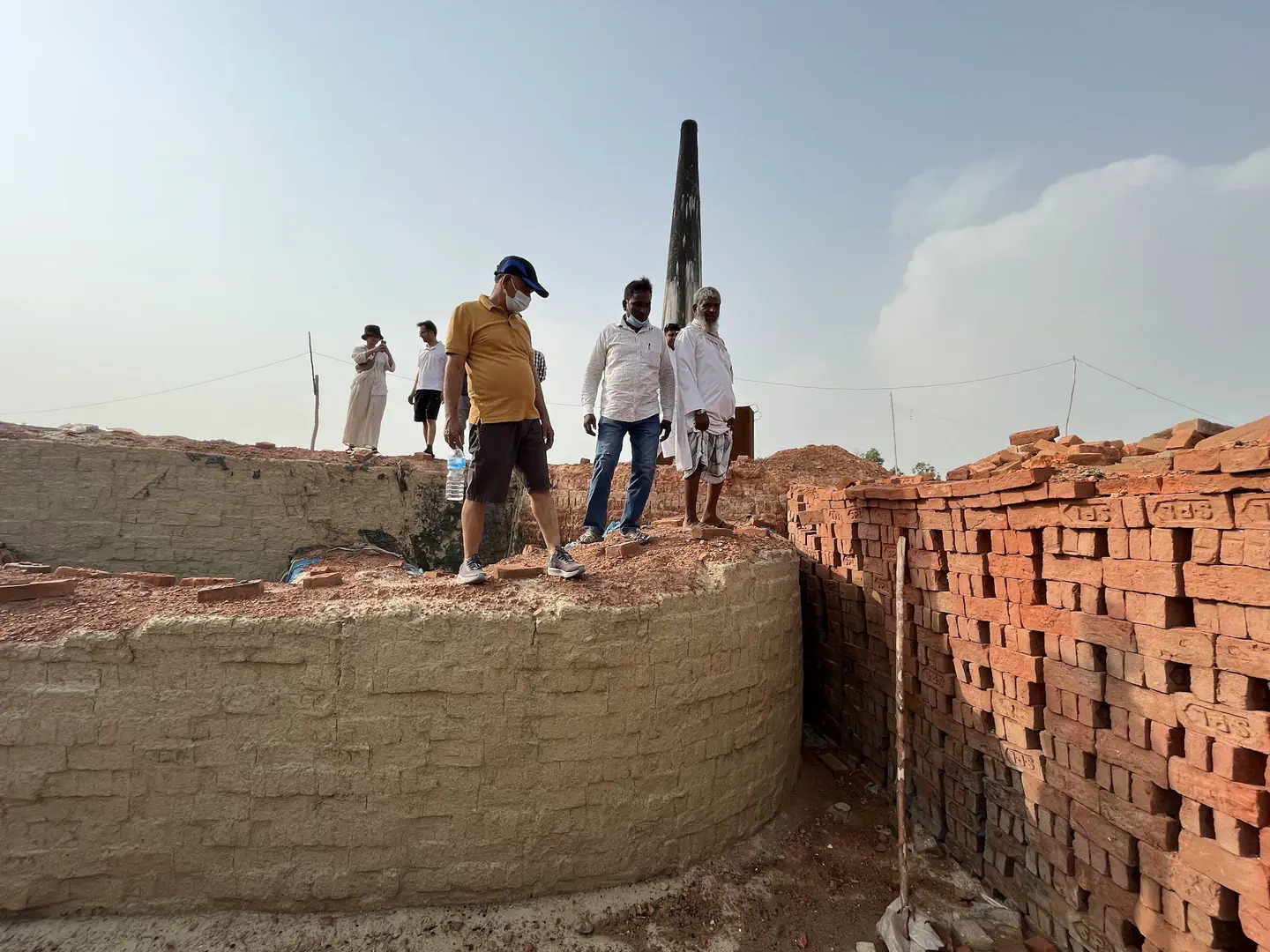
Brick kiln chimney rising above stacks of fired bricks
Portrait of Dana Pillai
Dana Pillai Sector specialist

Field-grounded judgment

Regional screening is stronger when public evidence stays grounded in how kilns actually operate.

A map alone does not originate projects. The purpose of the platform is to connect regional evidence with practical brick kiln knowledge: how kilns actually run, where upgrade pathways are realistic, and which shortlisted corridors are most likely to move from screening to real engagement. That is why this work combines geospatial analysis with sector knowledge rather than treating the ranking as a final answer.

Dana Pillai anchors the field-grounded side of the platform: kiln process knowledge, owner realities, upgrade pathways, and the practical conditions that determine whether a corridor should move from shortlist to implementation. This is especially important in a sector where formal technology labels do not always reflect real operating practice, and where outcomes depend as much on operation, training, and follow-through as on nominal conversion itself.

  • Sector expertise is used to interpret public evidence, not replace it.
  • Corridor ranking is treated as a shortlist for validation, not as a final verdict.
  • The platform is designed to support upgrade origination, not just visual analysis.

Inside the dashboard

Explore ranked kiln corridors, score drivers, and evidence strength.

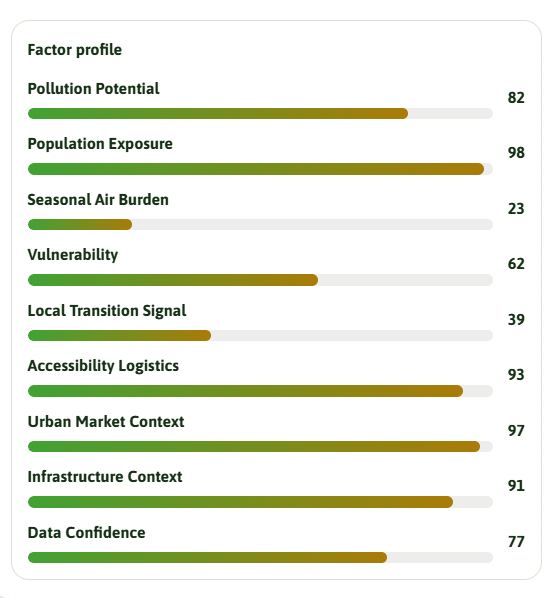
The dashboard is the public evidence layer of the platform. It allows users to review scored kiln corridors across the current geography, inspect why a corridor ranks where it does, and see how harm, readiness, and confidence combine into a practical priority view. The interface is designed for transparency: users can move from map to ranked table to corridor detail without losing sight of what is measured, what is inferred, and what still requires field confirmation.

This matters because credibility in this sector depends on clear explanation. A shortlist is only useful if viewers can understand how it was built, where the evidence is stronger, and where caution still applies. The dashboard is therefore intended to be read as a public screening tool for project development, not as a black-box scoring engine.

What users can review

  • Ranked corridor view with transparent score breakdown
  • Confidence preserved as a separate evidence-strength signal
  • Country, kiln-type, and evidence filters for focused review
  • Corridor detail panels to support validation and follow-up
Dashboard factor profile showing corridor score drivers
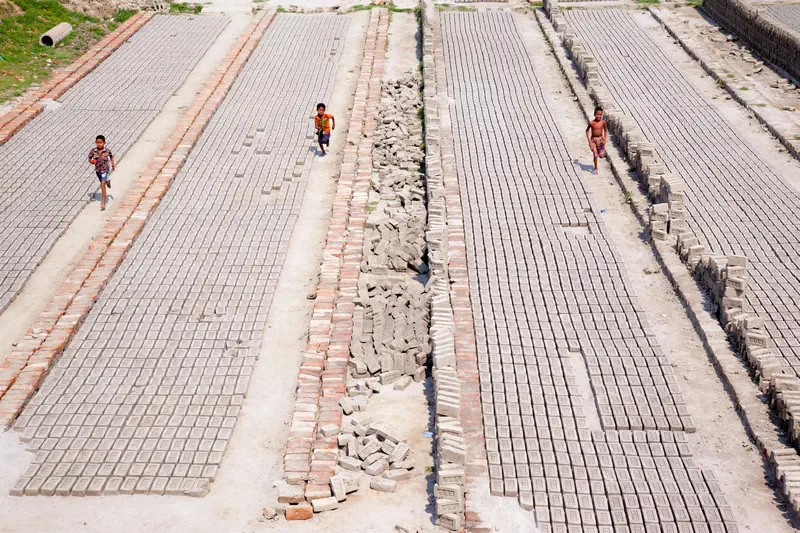
Children walking among drying bricks

Next step

Use the evidence layer to move from regional screening to practical engagement.

Brick Kiln Analytics is built to support the earliest and most difficult stage of intervention development: deciding where to look first. The platform does not claim to replace fieldwork, owner dialogue, or verification. It is designed to make those next steps more disciplined, more transparent, and more defensible.

Review the ranked corridor layer, examine the methodology, and use the shortlist as the starting point for validation, engagement, and project development.